

Mill scale removal on plate and structural steel
Hot-rolled steel arrives with a layer of mill scale that paint will not hold to and welds do not like. A roller-conveyor wheel blast machine strips it from every face in one pass and leaves the profile the primer needs.
Why mill scale has to go
Mill scale is a hard, brittle iron oxide that forms as steel cools after hot rolling. It looks sound, but it is more noble than the steel under it, so once moisture reaches a crack the steel corrodes beneath the scale and the scale lifts, taking the paint with it. Coating manufacturers will not warrant a system applied over intact scale, and weld procedures on scaled plate produce more porosity and spatter.
How a blast line removes it
Steel rides a roller conveyor through a blast cabinet where four to eight centrifugal wheels throw steel abrasive at the top, bottom and both flanges at once. The scale shatters and falls away with the spent abrasive, which is screened, air-washed and returned to the wheels. A brush and blow-off section at the exit clears abrasive from webs and flanges so the steel leaves ready for primer.
Finish grade and profile
The specification usually names two things: a cleanliness grade and a surface profile. Sa 2½, or SSPC-SP 10 near-white, allows only light shadows or streaks on five percent of the surface and is what most industrial primers call for. The profile is the peak-to-valley roughness the coating keys into, checked with replica tape. Round shot gives a peened, lower profile; adding angular grit to the mix raises it.
What sets the machine size
The widest and tallest section you run sets the work opening. Line speed follows from the grade you need and the condition of the incoming steel: heavily pitted or painted stock runs slower than fresh A-grade plate. Tell us the largest section, the tonnes per shift and whether steel is blasted before or after fabrication, and the wheel count and horsepower follow from that.
At a glance
| Typical parts | Plate, W-beams, HSS, channel, angle, flat bar, welded girders |
|---|---|
| Finish specified | ISO 8501-1 Sa 2½ (SSPC-SP 10 near-white) for most coating systems; Sa 2 (SP 6 commercial) for lighter duty |
| Surface profile | Commonly 50 to 75 µm for shop primers; the coating data sheet sets the number |
| Media | Steel shot, or a shot and grit operating mix when the coating needs a sharper profile |
| Machine | Plate and structural roller-conveyor machine; a blast booth for pieces too large for the work opening |
Finish grades, profiles and media on this page describe common industry practice. Your coating or process specification governs.
Machines for this job
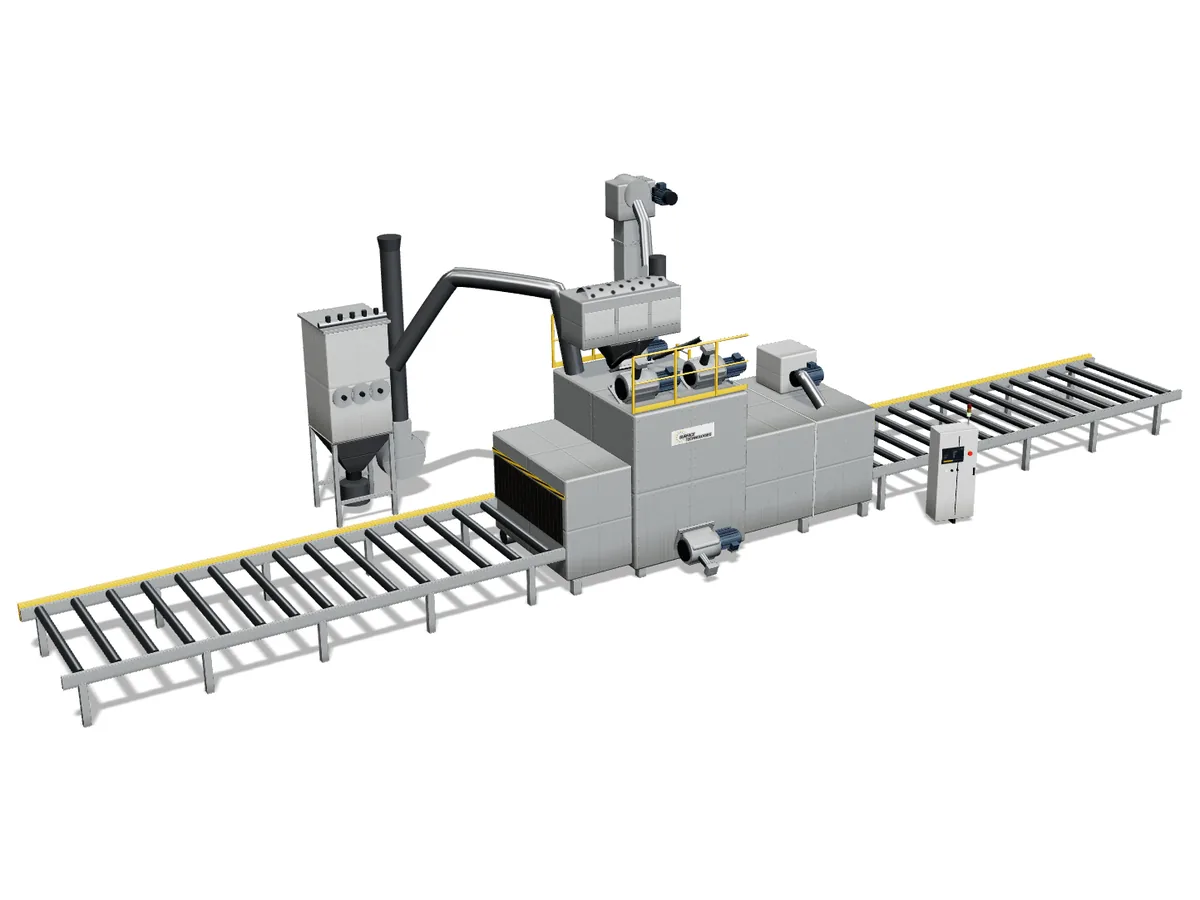
Plate & Structural Shot Blast Machine
Flat plate and structural steel members on the same machine.
See the machine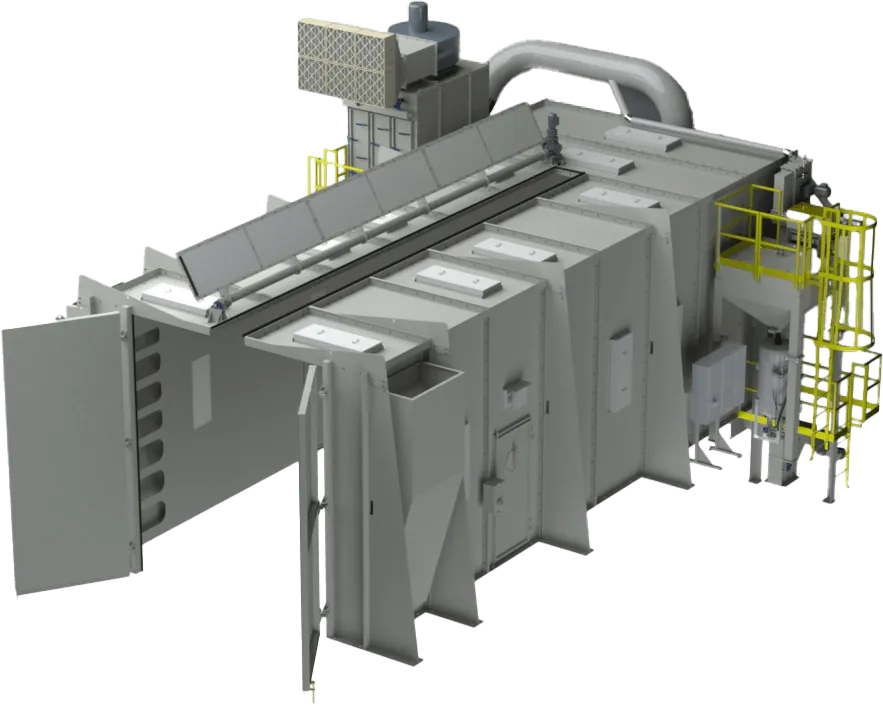
Blast Booth (Sandblasting Booth)
A controlled enclosure for surface preparation of large or intricate components.
See the machine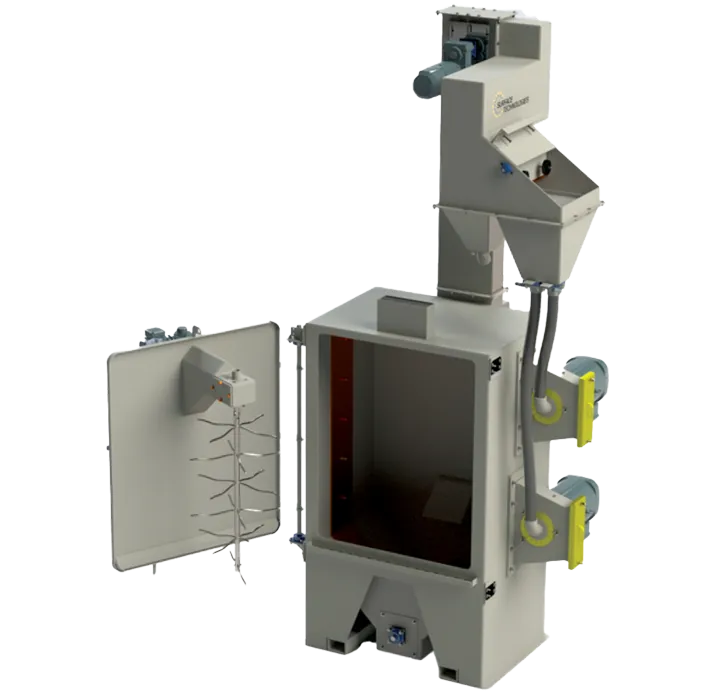
Spinner Hanger & Carousel Shot Blast Machine
Parts hang on rotating hooks while centrifugal wheels clean every face.
See the machineCommon questions
Is shot blasting before fabrication better than after?
Blasting stock before cutting gives cleaner cuts and welds and lets a preservation primer protect it through the shop. Blasting after fabrication cleans the weld zones as well. Many shops do both: stock through a plate line, then touch-up of welds in a booth.
What is the difference between Sa 2½ and SSPC-SP 10?
They are the ISO and SSPC names for essentially the same near-white cleanliness. Sa 2½ comes from ISO 8501-1 and SP 10 from SSPC (now AMPP). Coating data sheets usually accept either.
Can one machine handle both plate and beams?
Yes. A plate and structural machine is built around a work opening rather than a part type, so anything that fits through and sits on the rollers can run.
Related
Construction
Stronger structures start with surface treatment.
IndustryJob Shop Production
Faster turnaround on high-mix, low-volume work: one-step cleaning, deburring and prep that holds dimensional…
ApplicationRust and paint removal
Refurbished equipment, returned racks and corroded stock all need to come back to bare, profiled metal before they can…
ApplicationSurface preparation for coating
Most coating failures start at the surface, not in the coating.