

Surface preparation for paint, powder coating and galvanizing
Most coating failures start at the surface, not in the coating. Blasting gives paint, powder and zinc a clean, uniformly rough surface to grip, and it does it the same way on every part.
Clean and rough are two different jobs
Cleanliness is the removal of scale, rust, oil residues and old coatings. Profile is the pattern of peaks and valleys left behind. A coating needs both: a contaminated surface fails by blistering, and a smooth one fails by peeling. Abrasive blasting is the one preparation method that delivers both in a single, repeatable step.
Matching profile to the coating
Thin films such as e-coat and powder want a fine, even profile so the peaks do not show through. Heavy-build epoxies, zinc-rich primers and thermal spray want a deeper, sharper one. Abrasive type and size are the main controls: round shot peens the surface to a lower, rounded profile, and angular grit cuts a sharper, deeper one. Most production machines run a working mix tuned to the coating.
Why wheel blast suits a coating line
A wheel blast machine ahead of a paint or powder line gives every part the same finish at a known cycle time, without compressed air or an operator on a nozzle. Spinner hangers can share a monorail with the coating line, so parts are blasted, blown off and coated without being rehandled.
Non-ferrous and stainless parts
Carbon-steel abrasive leaves iron on aluminium and stainless that later shows as rust staining. These parts are prepared with stainless steel shot, aluminium oxide, glass bead or ceramic media, usually in an air blast cabinet or an automated air blast cell.
At a glance
| Typical parts | Welded fabrications, castings, brackets, frames, structural members, parts for powder coat lines |
|---|---|
| What is specified | A cleanliness grade (Sa 2 to Sa 3) and a surface profile range in µm or mils |
| How it is checked | Visual comparison to ISO 8501-1 photographs; replica tape or a profile gauge for roughness |
| Media | Steel grit or a shot and grit mix on steel; stainless or non-metallic media on aluminium and stainless |
| Machine | Spinner hanger for parts that hang; plate machine for long steel; table or booth for heavy or oversize work |
Finish grades, profiles and media on this page describe common industry practice. Your coating or process specification governs.
Machines for this job
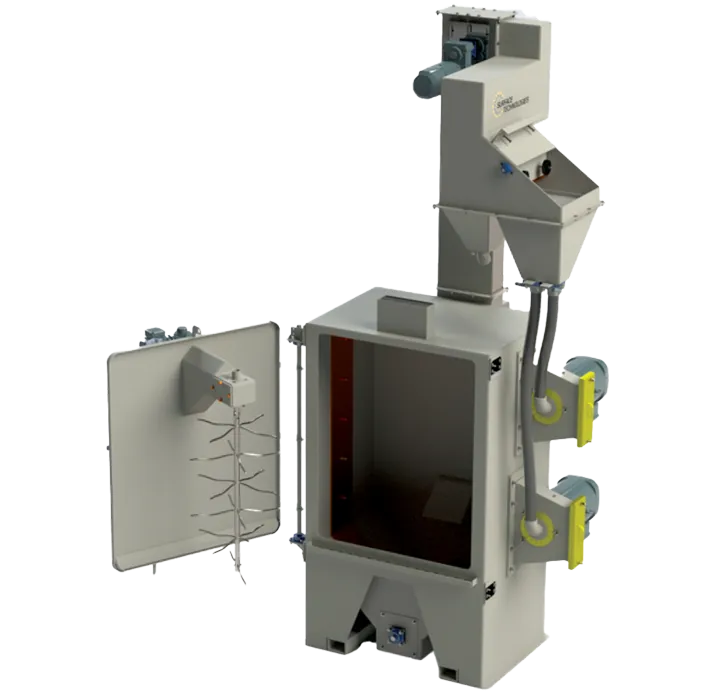
Spinner Hanger & Carousel Shot Blast Machine
Parts hang on rotating hooks while centrifugal wheels clean every face.
See the machine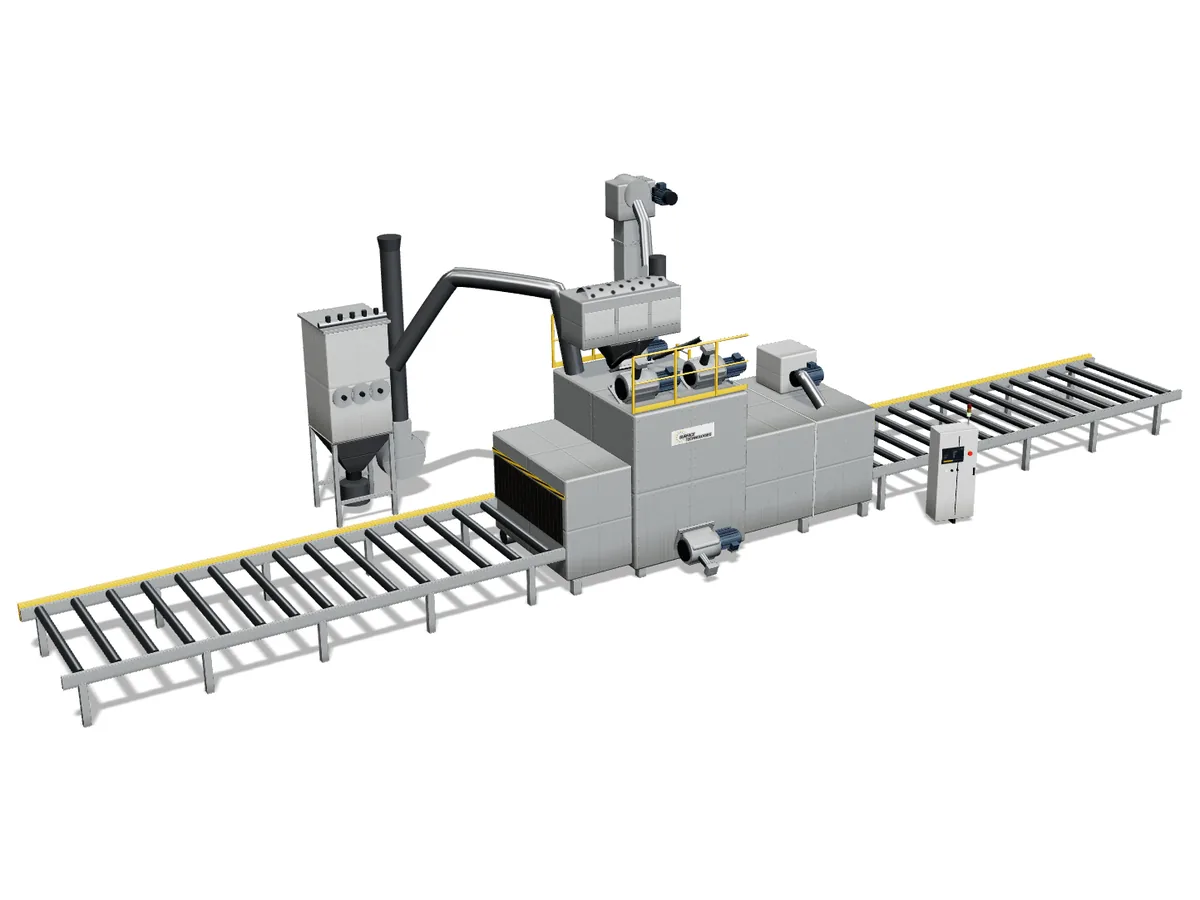
Plate & Structural Shot Blast Machine
Flat plate and structural steel members on the same machine.
See the machine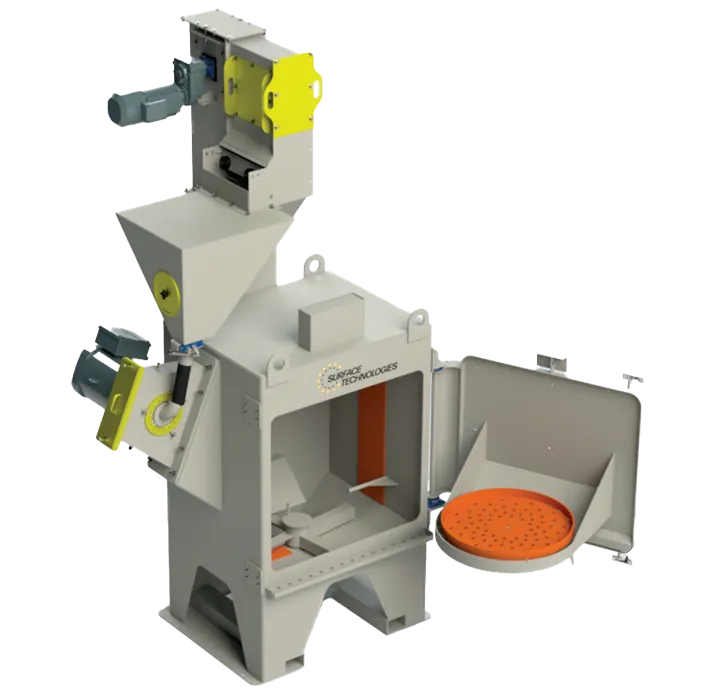
Table Blast Machine
A rotating worktable exposes every surface of heavy parts that can't be tumbled or hung.
See the machine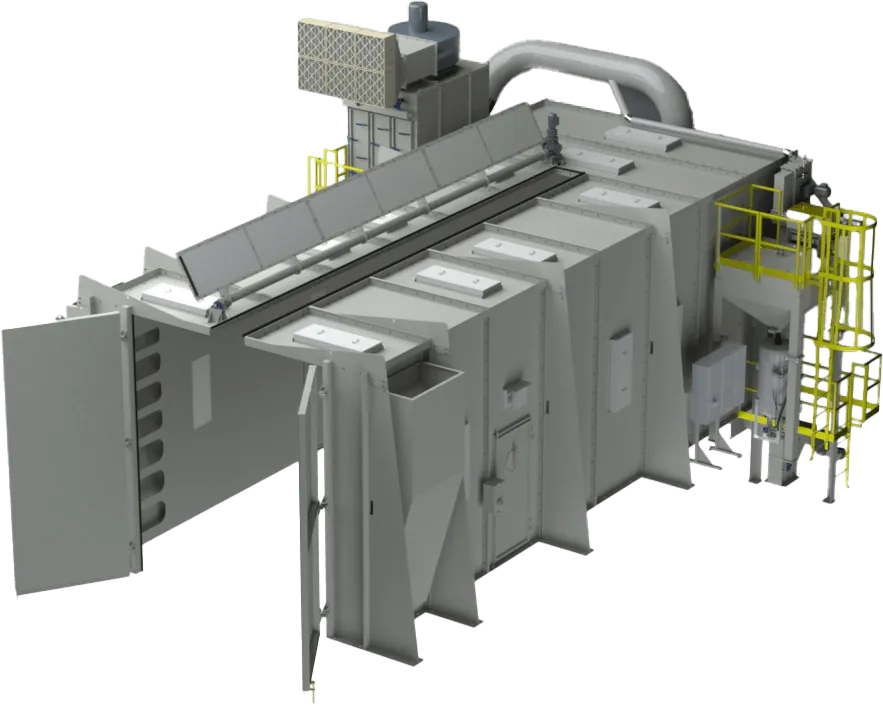
Blast Booth (Sandblasting Booth)
A controlled enclosure for surface preparation of large or intricate components.
See the machineCommon questions
What surface profile does powder coating need?
Powder suppliers commonly ask for a fine profile, often in the range of 25 to 50 µm, so the film covers the peaks. Check the data sheet for the powder you use.
Do parts need to be degreased before blasting?
Yes. Blasting does not remove oil; it spreads it and contaminates the abrasive. Wash or degrease first, then blast.
Can blasting replace chemical pretreatment?
For many steel fabrications a blast profile replaces phosphate as the mechanical key. Some coating systems still specify a conversion coating as well, so follow the system specification.
Related
Automotive Production
Centrifugal shot blast systems that keep a production line moving: coating prep, peening, deburring and scale…
IndustryConstruction
Stronger structures start with surface treatment.
ApplicationDescaling plate and structural steel
Hot-rolled steel arrives with a layer of mill scale that paint will not hold to and welds do not like.
ApplicationRust and paint removal
Refurbished equipment, returned racks and corroded stock all need to come back to bare, profiled metal before they can…