

Wire Mesh Belt Shot Blast Machine
A continuous machine for parts that must not tumble or hang. Work rides flat on a wire mesh belt between blast wheels above and below, so both faces are cleaned in one pass. Also called a mesh belt shot blast machine or wire mesh conveyor blast machine.
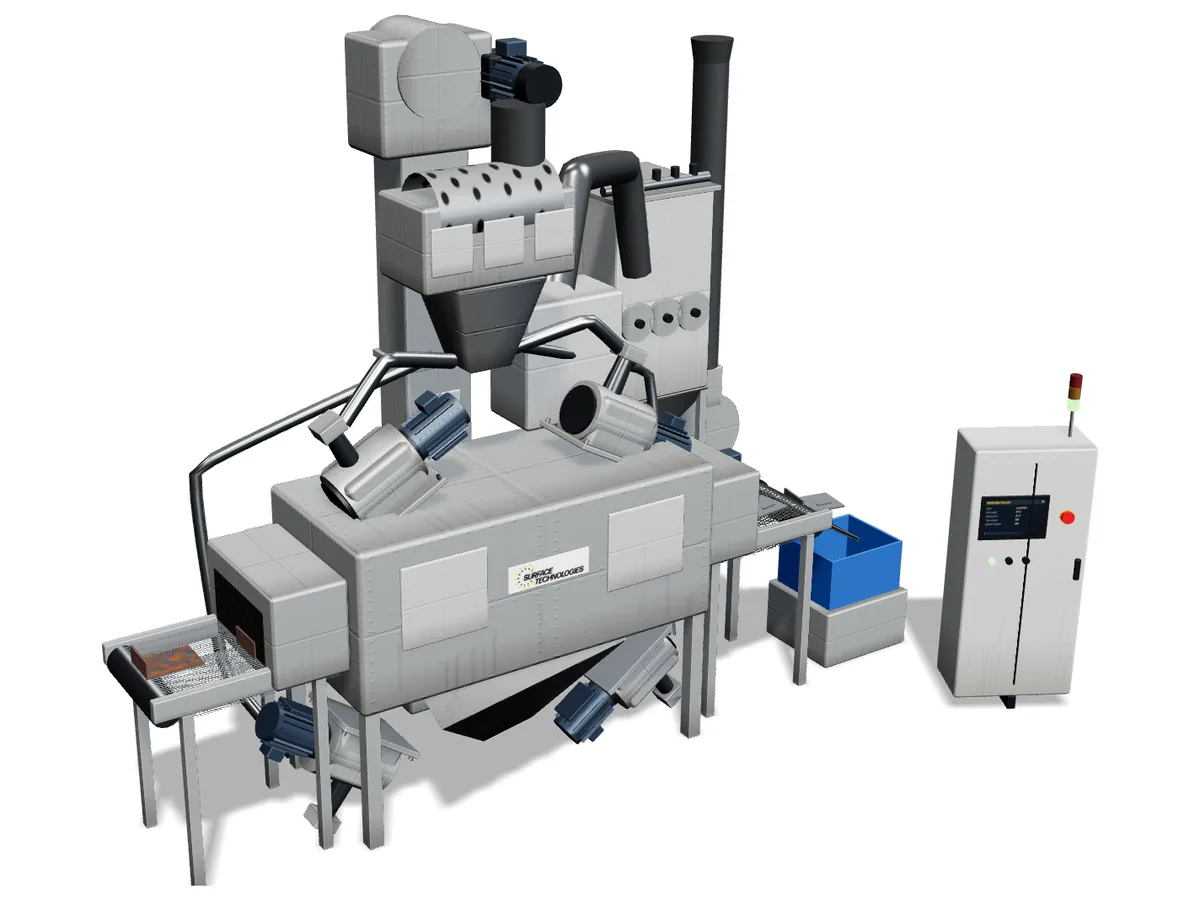
What's in the machine
- Wear-resistant wire mesh belt with open weave for blasting from below
- Wheels above and below the belt, angled for both faces and the edges
- Spent abrasive falls through the belt to the reclaim
- Loading and unloading conveyors sized to the flow
- Blow-off at the exit
- Air-wash separator and dust collection
Options
- Belt width to suit the largest part
- Long loading and unloading conveyors
- Feed to or from a roll conveyor line
- Line speed tied to the process upstream
Specifications engineered to the part
| Sizing | Work opening, wheel count and horsepower are set from your part portfolio and throughput. |
|---|---|
| Power | 460 V 3-phase, 24 VDC controls; panel certified to the installation jurisdiction. |
| Dust collection | Sized to the cabinet and seals; see utility requirements. |
| Lead time | See current lead times. |
How it runs
- Parts are laid on the moving mesh belt
- Wheels above and below blast both faces in one pass
- Abrasive falls through the belt and is reclaimed
- Blow-off clears shot from the parts
- Parts leave in the order they went in
Example configurations
Layouts we have proposed for different parts and volumes. Every machine is engineered to the part, so yours will be sized to your work.
- 24 in mesh belt with long loading and unloading conveyors
- 27 in belt, 4 wheels
- 6 wheels at 15 HP
- 6-wheel mesh belt feeding a roll conveyor line
- 4-wheel mesh belt with unloading for drum lids
Running cost. A four-wheel mesh belt machine with 60 HP of wheels runs at about $30 per blast hour for power, compressed air, steel shot and wear parts, before labour. Work out yours
See it run in 3D
A working model of the mesh belt machine in a plant setting. Watch the cycle, open it up, follow the part, trace the media loop and check the dimensions. Drag to look around; tap the machine to switch between the outside and the inside.
- Parts are laid on the mesh belt
- Top wheels blast the upper face and edges
- Bottom wheels blast up through the mesh
- Shot falls through the belt and is reclaimed
- Clean parts leave in the order they went in
Shown: a 27 in belt with four wheels, after one of our proposal layouts. Belt width and wheel count follow your parts. Illustrative model for visual purposes only: every machine is engineered to order, so sizes, spacing and layout follow your part.
Industries that run it
- Die castings and aluminium parts
- Heat-treated parts
- Laser-cut, flame-cut and stamped parts
- Thin castings and forgings
- Drum and container components
- Fragile or cosmetic parts
Applications
Plan the install
- Utility requirements for power, air and ventilation
- Pre-installation checklist
- Lead times and the delivery guide
- Budget the full line with the estimator
- Ways to buy
Related reading
How shot blasting works
Wheels, media, separators and dust: the whole loop explained in plain terms.
GuideChoosing a shot blast machine
Match the machine type to your part, volume and finish spec before you ask for a price.
GuideSite requirements for blast equipment
Power, compressed air, ventilation, floor, ceiling height and access: what to have ready before delivery.
GuideDelivery and lead times
What happens between the PO and the first part off the line, and how long each step takes.
Questions we get asked
What is the difference between shot blasting and sand blasting?
Shot blasting is the industry term for treating steel with propelled media, mostly in automated equipment: to descale, and to prep for paint. Sand blasting is, in essence, shot blasting done in a manual environment. Nobody really uses sand; the media is aluminum oxide, garnet, walnut or other compounds.
What is shot peening?
A controlled form of shot blasting. Electrical controls set the size and depth of the dent in the steel, which reduces residual stress in the part. It is used wherever parts need less fatigue and a longer life.
Do you stock replacement parts?
We have stocking programs for specific needs. We encourage keeping critical parts next to the machine, but if you're short on space we're happy to stock important parts for your process.
Do you guarantee the performance of your parts?
Yes. We support new and existing equipment in the field, identify problems before they become serious, and offer programs that guarantee machine performance.