

Monorail Shot Blast Machine
Parts hang from an overhead monorail and travel through the blast cabinet between sealed entrance and exit vestibules, past wheels placed to reach every face. Batch or continuous, it fits plants that already move work on hooks to paint. Also called an overhead monorail blast machine, hook pass-through blast machine or power and free blast machine.
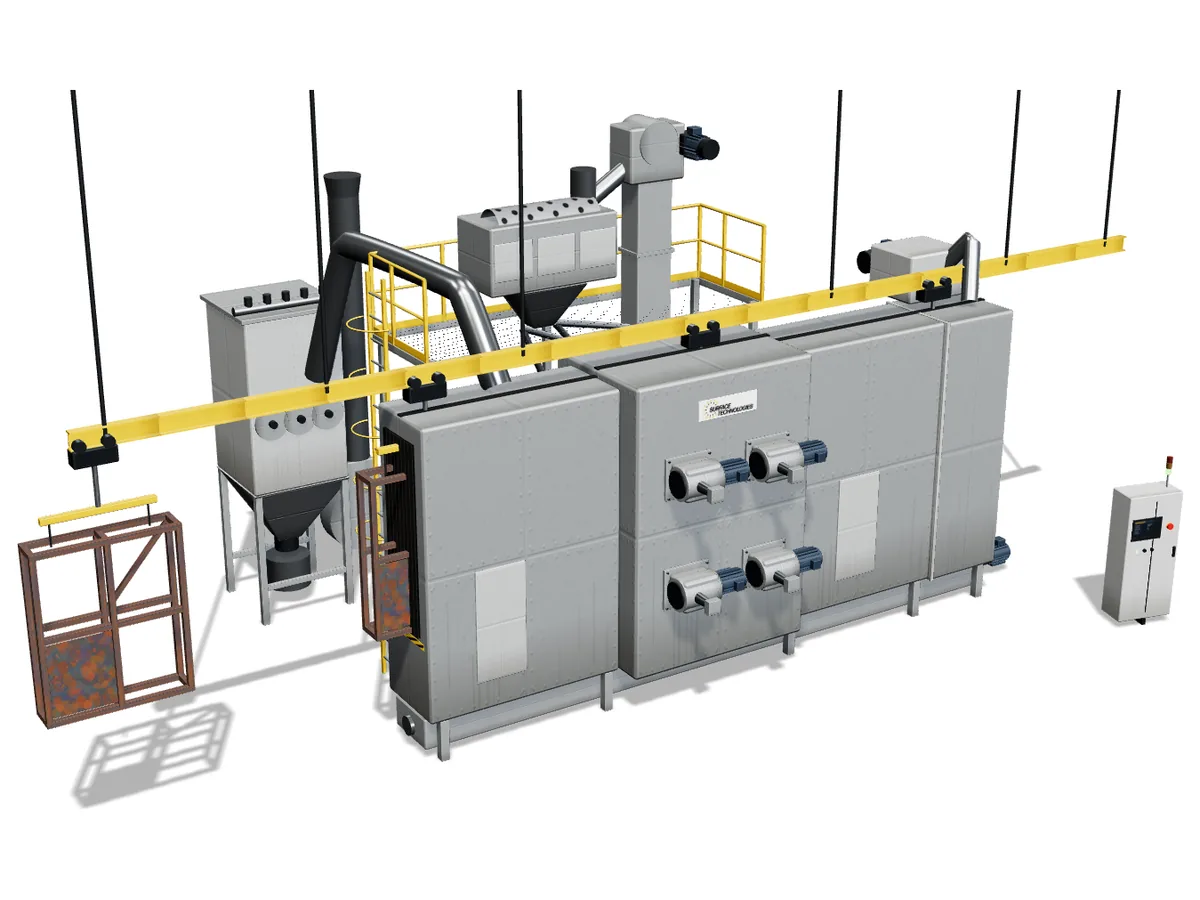
What's in the machine
- Entrance and exit vestibules with several sets of finger seals
- Blast wheels in angled pods to reach every face of the hanging part
- Blow-off chamber ahead of the exit
- Reclaim screw, bucket elevator and separator with rotary screen
- Service platform for the separator and wheels
- Abrasive adder
Options
- Power and free conveyor
- Batch (index in, blast, index out) or continuous travel
- Wheel count to suit the part envelope
- Integration with your paint or powder line
- Mesh belt pre-blast on the same system
Specifications engineered to the part
| Sizing | Work opening, wheel count and horsepower are set from your part portfolio and throughput. |
|---|---|
| Power | 460 V 3-phase, 24 VDC controls; panel certified to the installation jurisdiction. |
| Dust collection | Sized to the cabinet and seals; see utility requirements. |
| Lead time | See current lead times. |
How it runs
- Parts are hung on hooks or carriers on the monorail
- The carrier enters through the sealed vestibule
- Wheels in angled pods blast every face as the part passes
- Blow-off clears shot before the exit vestibule
- Shot is reclaimed, cleaned and returned to the wheels
Example configurations
Layouts we have proposed for different parts and volumes. Every machine is engineered to the part, so yours will be sized to your work.
- 30 × 96 in opening, 8 wheels at 15 HP
- 36 × 96 in post-blast, 8 wheels
- 8-wheel monorail with a 6-wheel mesh belt pre-blast
- Post-blast with power and free conveyor, 12 wheels
On the shop floor
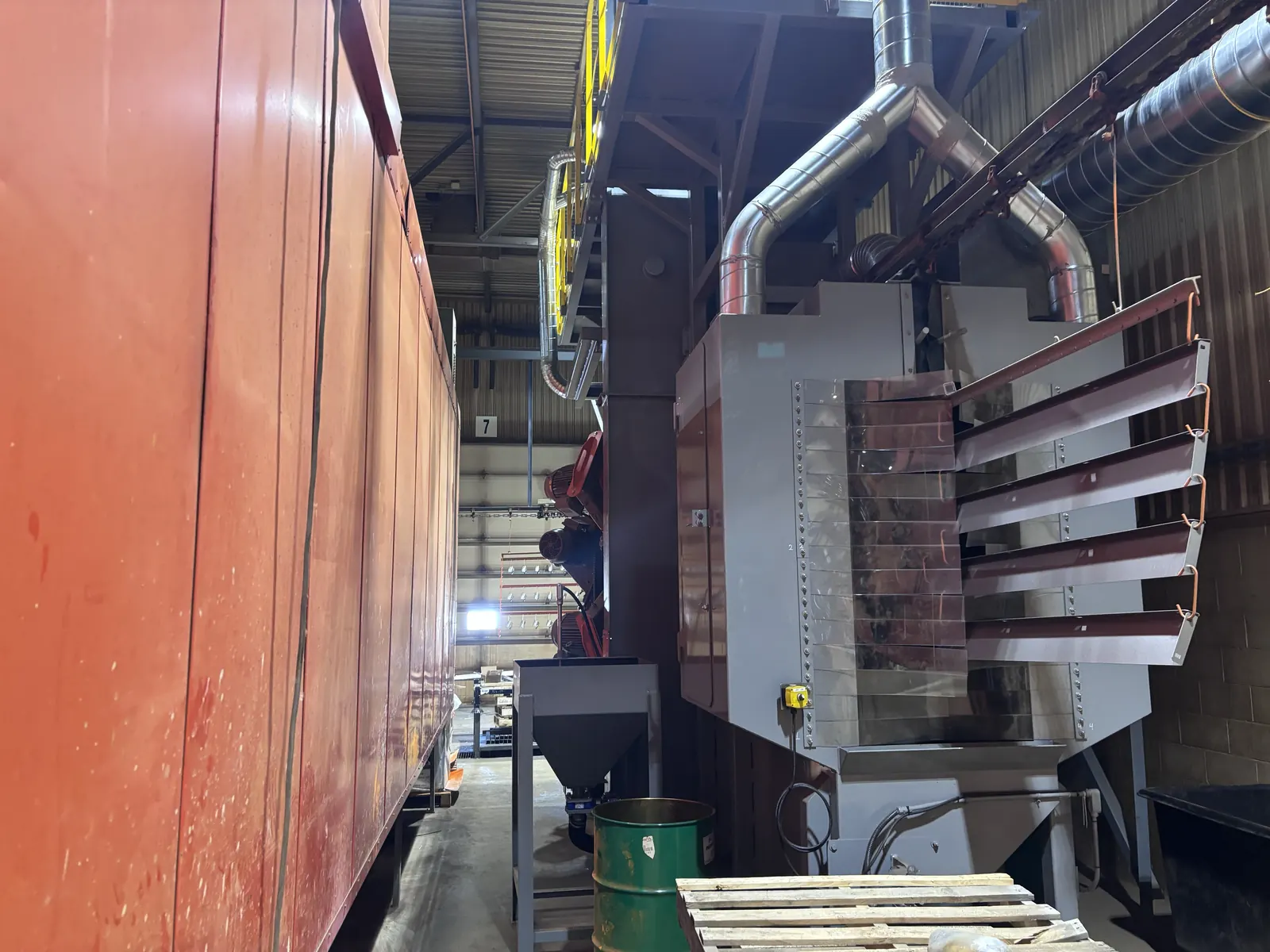
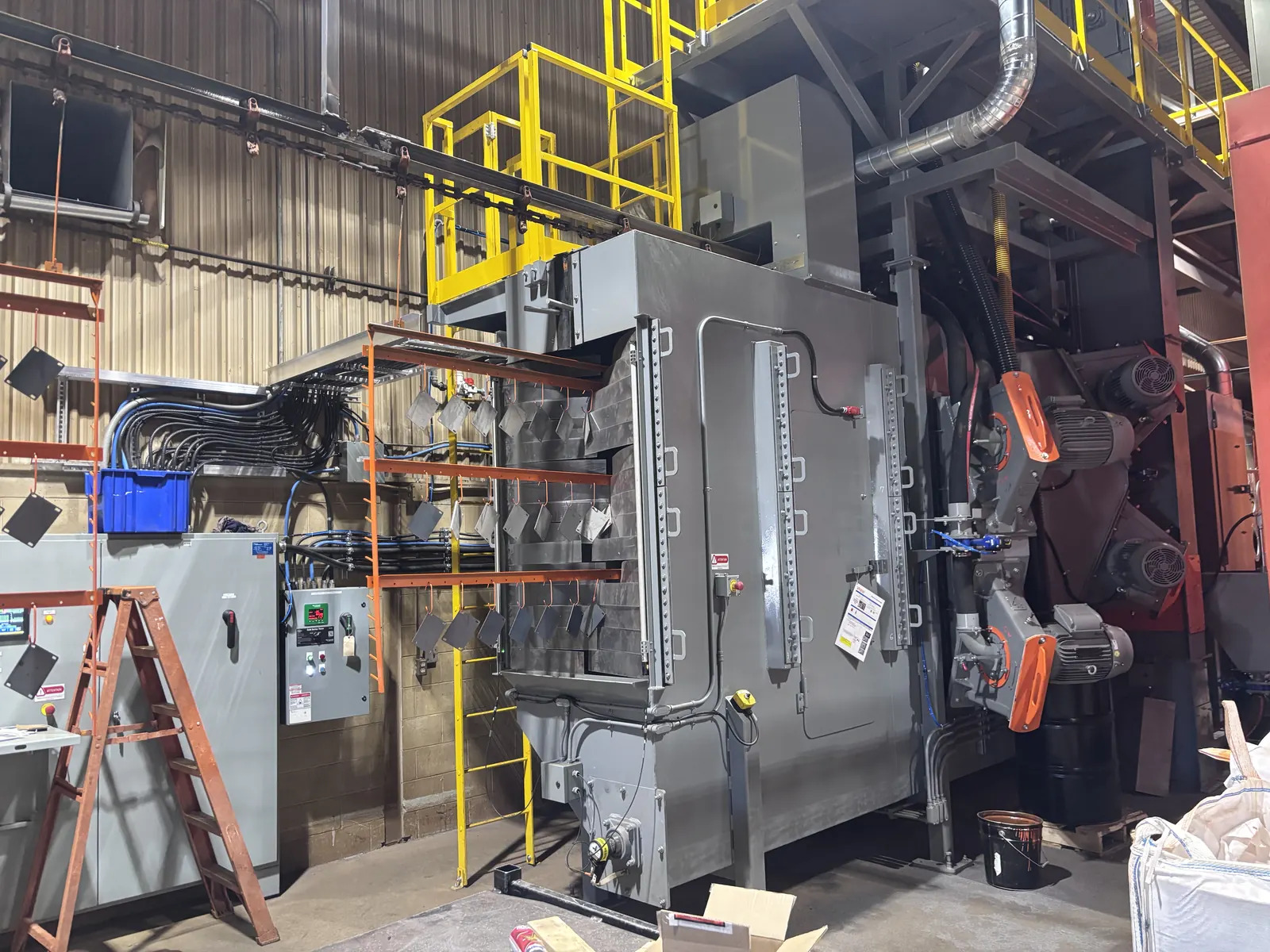
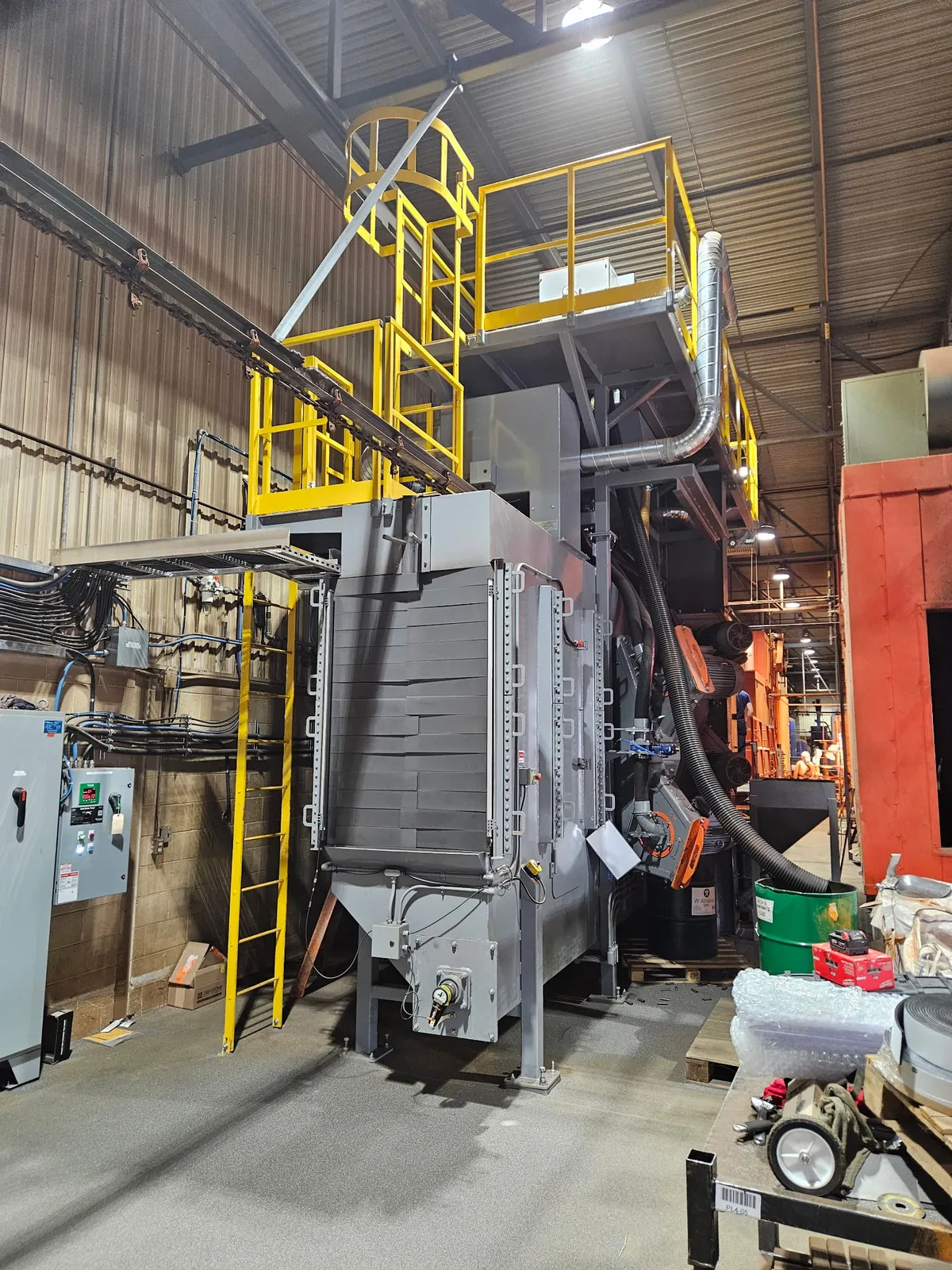
Surface Technologies machines in production.
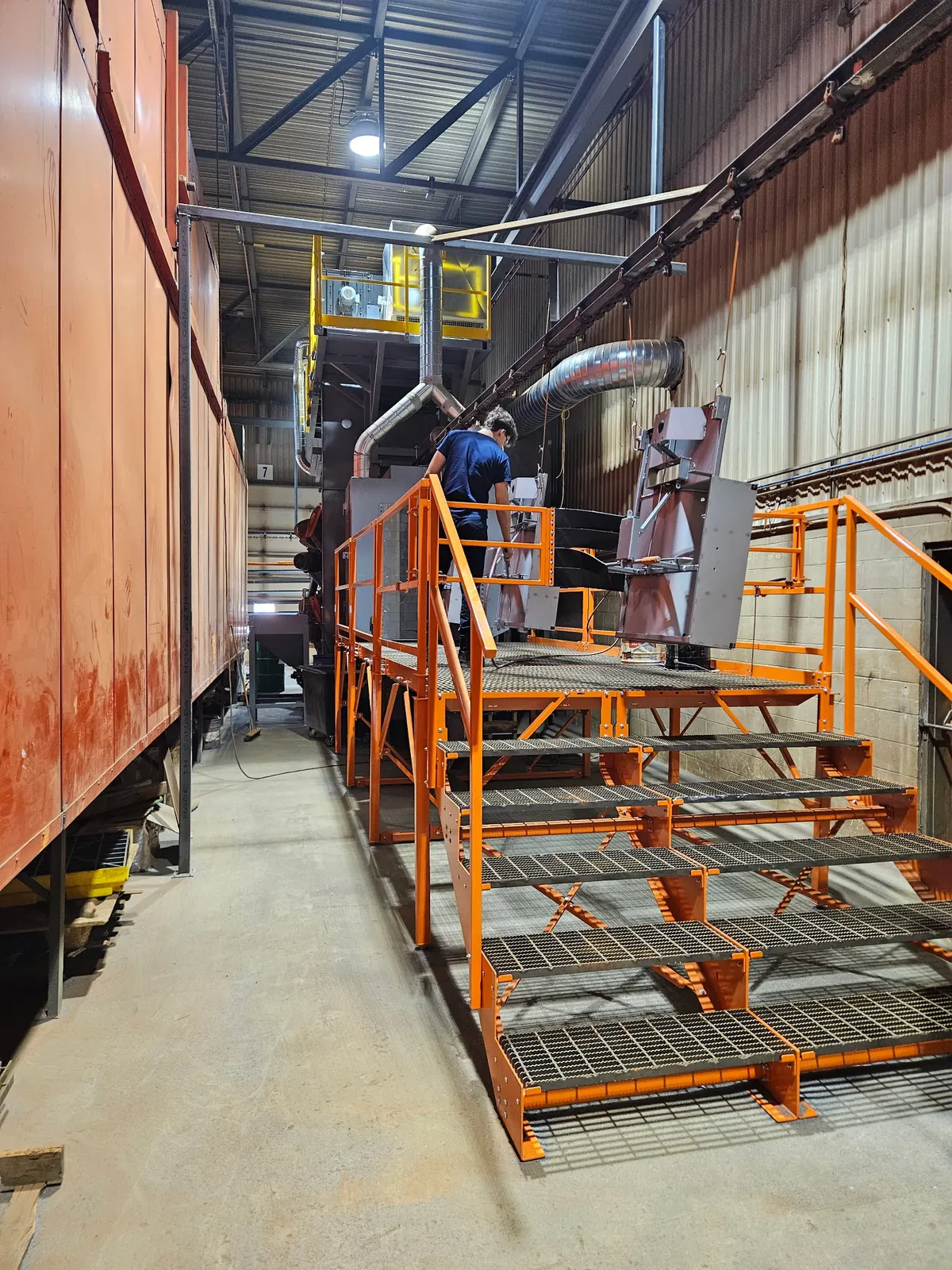
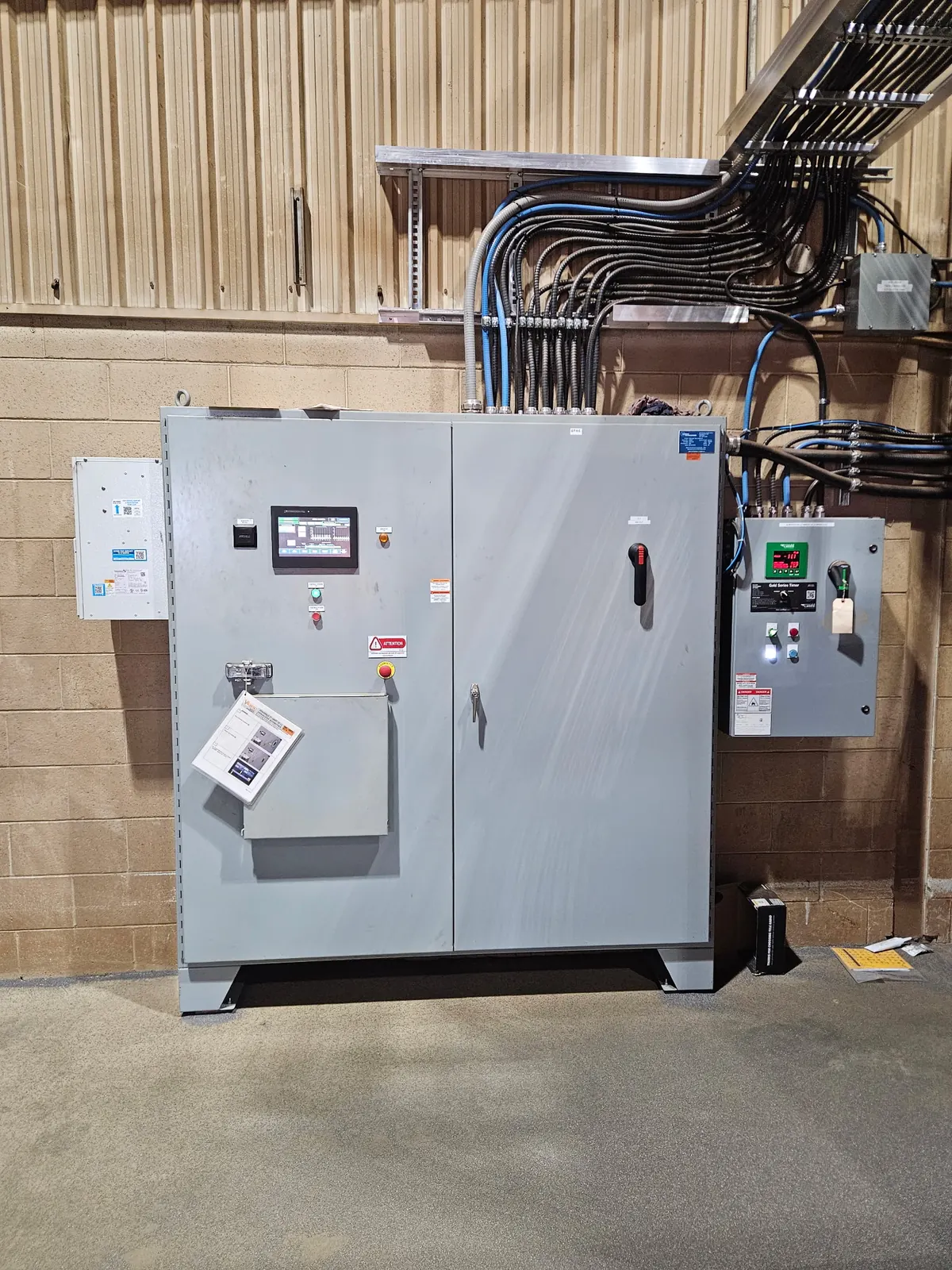
See it run in 3D
A working model of the monorail machine in a plant setting. Watch the cycle, open it up, follow the part, trace the media loop and check the dimensions. Drag to look around; tap the machine to switch between the outside and the inside.
- Parts are hung on carriers on the monorail
- The carrier enters through the vestibule seals
- Eight wheels in four pods blast every face
- Blow-off clears shot before the exit
- The clean part travels on to paint
Shown: a 30 × 96 in opening with eight 15 HP wheels, after one of our proposal layouts. Illustrative model for visual purposes only: every machine is engineered to order, so sizes, spacing and layout follow your part.
Industries that run it
- Structural and miscellaneous steel
- Agricultural equipment
- Tanks and pressure vessels
- Truck and trailer components
- Heavy equipment
- Parts heading to a paint line
Applications
Plan the install
- Utility requirements for power, air and ventilation
- Pre-installation checklist
- Lead times and the delivery guide
- Budget the full line with the estimator
- Ways to buy
Related reading
How shot blasting works
Wheels, media, separators and dust: the whole loop explained in plain terms.
GuideChoosing a shot blast machine
Match the machine type to your part, volume and finish spec before you ask for a price.
GuideSite requirements for blast equipment
Power, compressed air, ventilation, floor, ceiling height and access: what to have ready before delivery.
GuideDelivery and lead times
What happens between the PO and the first part off the line, and how long each step takes.
Questions we get asked
What is the difference between shot blasting and sand blasting?
Shot blasting is the industry term for treating steel with propelled media, mostly in automated equipment: to descale, and to prep for paint. Sand blasting is, in essence, shot blasting done in a manual environment. Nobody really uses sand; the media is aluminum oxide, garnet, walnut or other compounds.
What is shot peening?
A controlled form of shot blasting. Electrical controls set the size and depth of the dent in the steel, which reduces residual stress in the part. It is used wherever parts need less fatigue and a longer life.
Do you stock replacement parts?
We have stocking programs for specific needs. We encourage keeping critical parts next to the machine, but if you're short on space we're happy to stock important parts for your process.
Do you guarantee the performance of your parts?
Yes. We support new and existing equipment in the field, identify problems before they become serious, and offer programs that guarantee machine performance.