

Shot peening for fatigue life
Shot peening is not cleaning. Each impact stretches the surface a little, and the layer of compressive stress that results is what stops fatigue cracks from starting.
What peening does to the metal
Each piece of shot acts like a small hammer, leaving a dimple. The surface layer tries to spread and the metal beneath holds it back, which leaves the surface in compression. Fatigue and stress-corrosion cracks start in tension, so a compressed skin delays or prevents them. Springs, gears and rotating aerospace parts are peened for exactly this reason.
Intensity and the Almen strip
Intensity is the energy of the shot stream. It is measured by peening a standard steel strip clamped to a block; when released, the strip curves, and the arc height is read on an Almen gauge. Strips come in N, A and C thicknesses for light, medium and heavy intensities. A saturation curve from several strips establishes the exposure time at which the process is stable.
Coverage
Coverage is the percentage of the surface that has been dimpled. Full coverage means the original surface is obliterated when viewed under magnification, and specifications often call for 100 to 200 percent, meaning the time to full coverage or twice that. Too little coverage leaves unprotected areas; far too much can damage the surface.
What the equipment has to control
A peening machine is judged on repeatability. That means regulated air pressure or wheel speed, a metered media flow rate, shot kept round and in size by classification, and programmed nozzle and part motion so every part sees the same stream. Controls that store a recipe for each part number and log the cycle make the process auditable.
At a glance
| Typical parts | Springs, gears, shafts, connecting rods, turbine and compressor components, landing gear, welds |
|---|---|
| What is specified | Intensity (Almen arc height, N, A or C strip), coverage (usually 100% or more) and media type and size |
| Common specifications | SAE AMS 2430 and AMS 2432, SAE J443 and customer or OEM process specifications |
| Media | Cast steel shot, conditioned cut wire, ceramic bead or glass bead, kept round and in size |
| Machine | Automated air blast cell for controlled nozzle peening; wheel machines for higher-volume steel parts |
Finish grades, profiles and media on this page describe common industry practice. Your coating or process specification governs.
Machines for this job
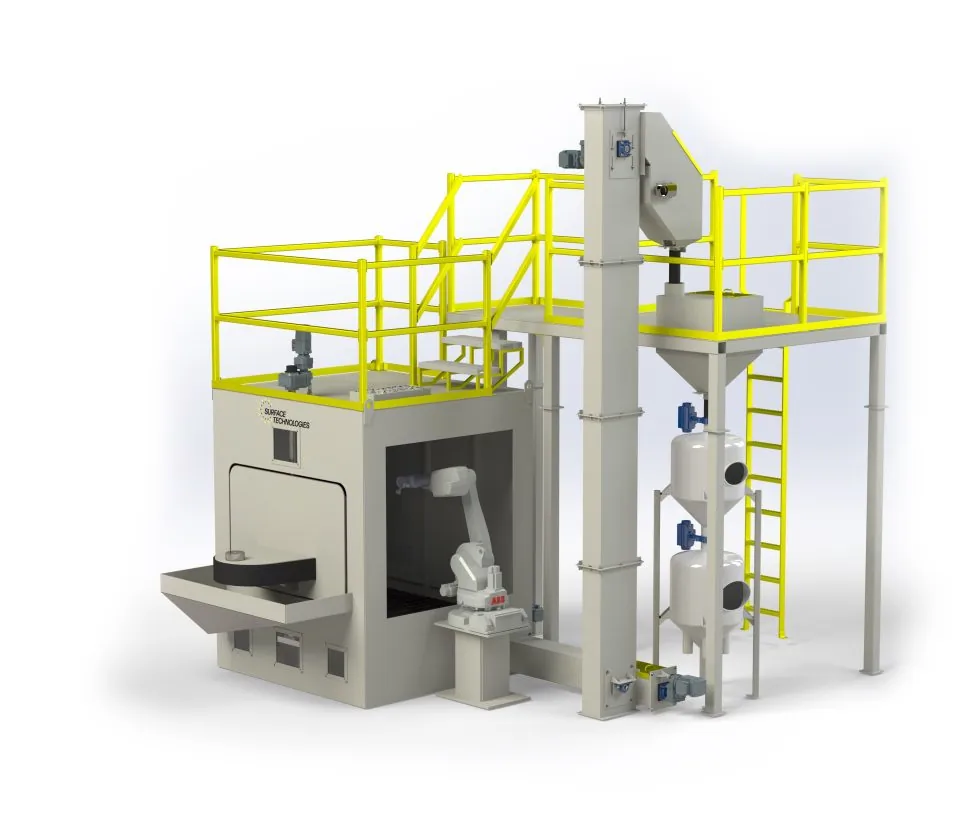
Air Blasting Equipment & Machines
Compressed-air blasting from a small manual cabinet to a fully automated cell with part manipulation.
See the machine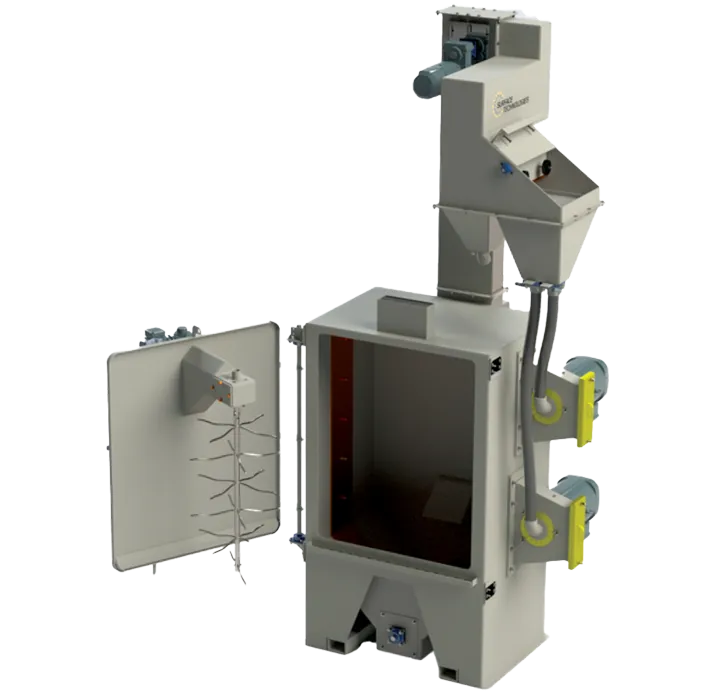
Spinner Hanger & Carousel Shot Blast Machine
Parts hang on rotating hooks while centrifugal wheels clean every face.
See the machine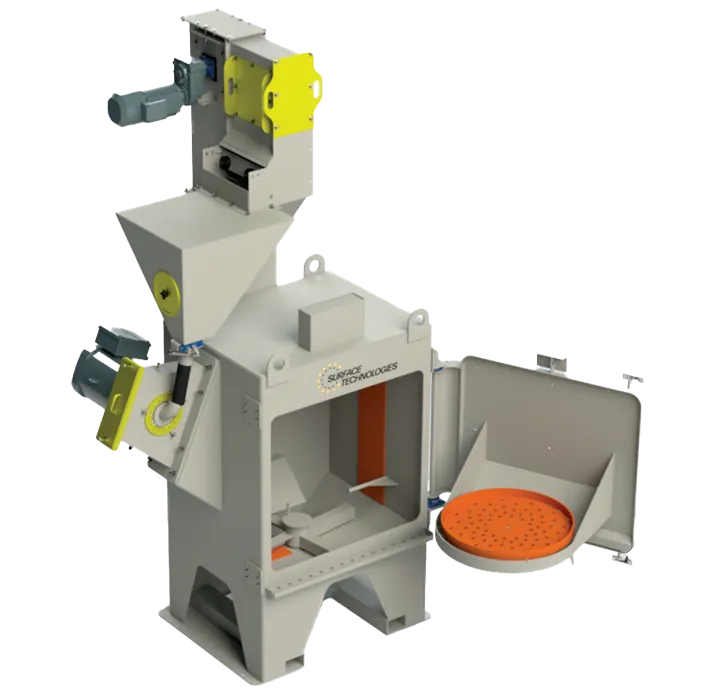
Table Blast Machine
A rotating worktable exposes every surface of heavy parts that can't be tumbled or hung.
See the machineCommon questions
Is shot peening the same as shot blasting?
They use similar machines but have different aims. Blasting cleans and profiles a surface. Peening works it to induce compressive stress, with the intensity and coverage controlled and verified.
Can a blast machine be used for peening?
A machine intended for peening needs tighter control of media condition, flow and motion than a cleaning machine. Existing machines can sometimes be upgraded with new controls and media classification.
How is a peening process verified?
With Almen strips at the start and at set intervals, coverage inspection under magnification, and records of pressure, flow and time for each batch.
Related
Automotive Production
Centrifugal shot blast systems that keep a production line moving: coating prep, peening, deburring and scale…
IndustryAerospace Engineering
Controlled surface treatment for manufacturers and MRO providers: peening to extend fatigue life, coating…
ApplicationDescaling plate and structural steel
Hot-rolled steel arrives with a layer of mill scale that paint will not hold to and welds do not like.
ApplicationRust and paint removal
Refurbished equipment, returned racks and corroded stock all need to come back to bare, profiled metal before they can…