

Deflashing moulded thermoset parts
Thermoset flash is hard and brittle while the part beneath it is tough. Plastic media thrown at controlled speed breaks the flash away and leaves the part surface untouched, at room temperature.
Why thermosets deflash so well
A cured thermoset does not soften, so the thin flash at the parting line stays glass-hard. Under impact from plastic media it snaps cleanly at the root, while the thicker part wall simply absorbs the hit. That difference is what lets a machine deflash thousands of parts without a mark on any of them.
Tumbling parts in a batch
Small, robust parts are loaded as a batch and tumbled under the blast stream so every face is presented. A tumble drum suits the smallest parts; a tumble belt handles larger batches and heavier parts and unloads by reversing the belt.
Parts that cannot tumble
Parts that would chip, tangle or mark each other ride flat on a wire mesh belt between up-blast and down-blast wheels, so both faces are deflashed in one pass. Large or delicate parts that need to be held in a set position are fixtured on a dual-station indexer, where one station is loaded while the other is blasted.
Static and dust
Dry plastic parts and plastic media build static, and dust clings to the finished part. Anti-static measures and a blow-off at the exit, together with a media reclaim system that separates flash and fines, are what keep parts clean enough to go straight to assembly.
At a glance
| Typical parts | Circuit breaker and switch components, terminal housings, appliance parts, automotive under-hood mouldings |
|---|---|
| Materials | BMC, SMC, phenolic, epoxy and other compression, transfer and injection-moulded thermosets |
| Media | Non-abrasive plastic media, sized to reach the flash without marking the part |
| Machine | Tumble drum or tumble belt for batches; wire mesh belt for continuous flow; dual-station indexer for fixtured parts |
Finish grades, profiles and media on this page describe common industry practice. Your coating or process specification governs.
Machines for this job
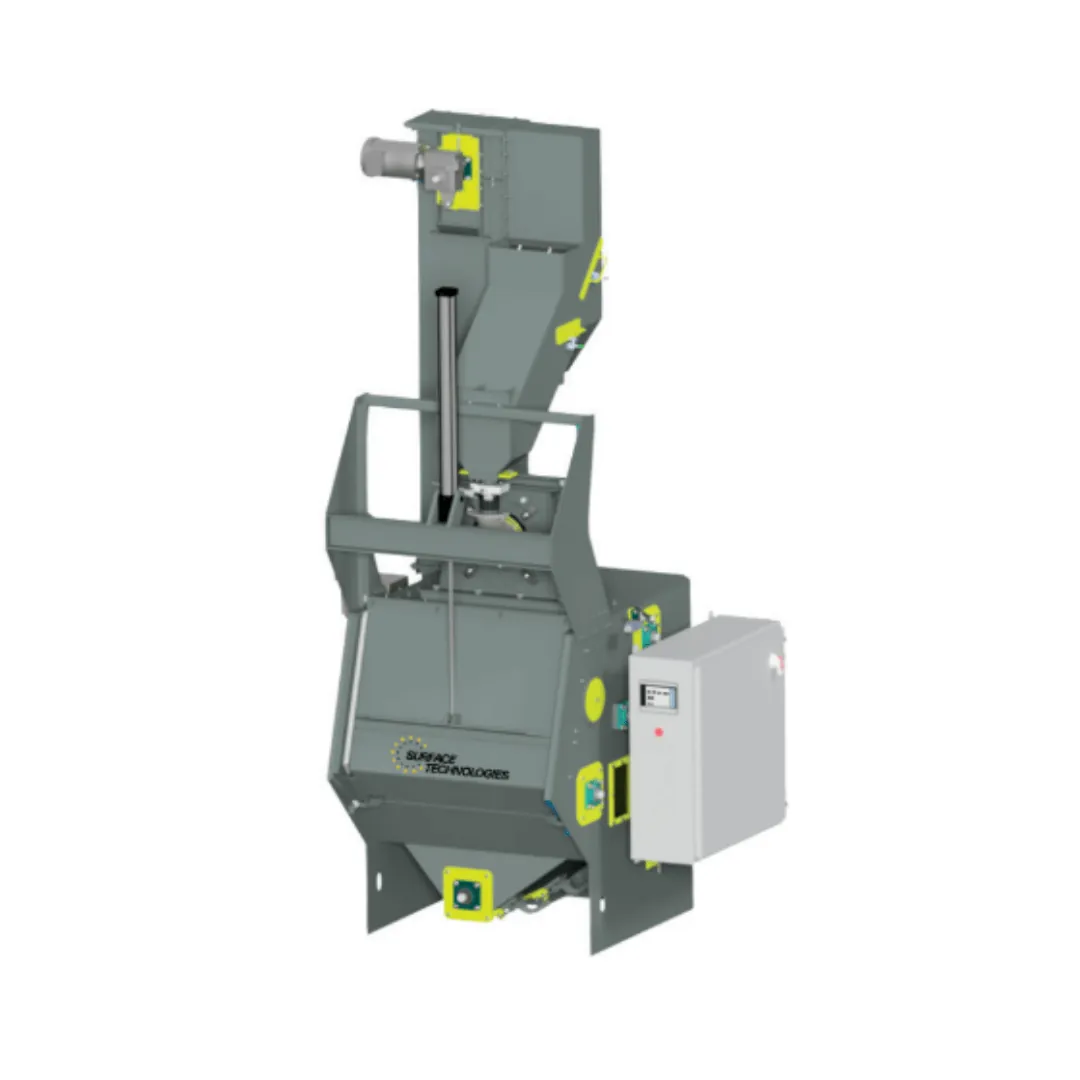
Tumble-Belt Deflashing Machine
Batch tumbling on an endless rubber belt under a single wheel, with the full media recycling system and anti-static injection…
See the machine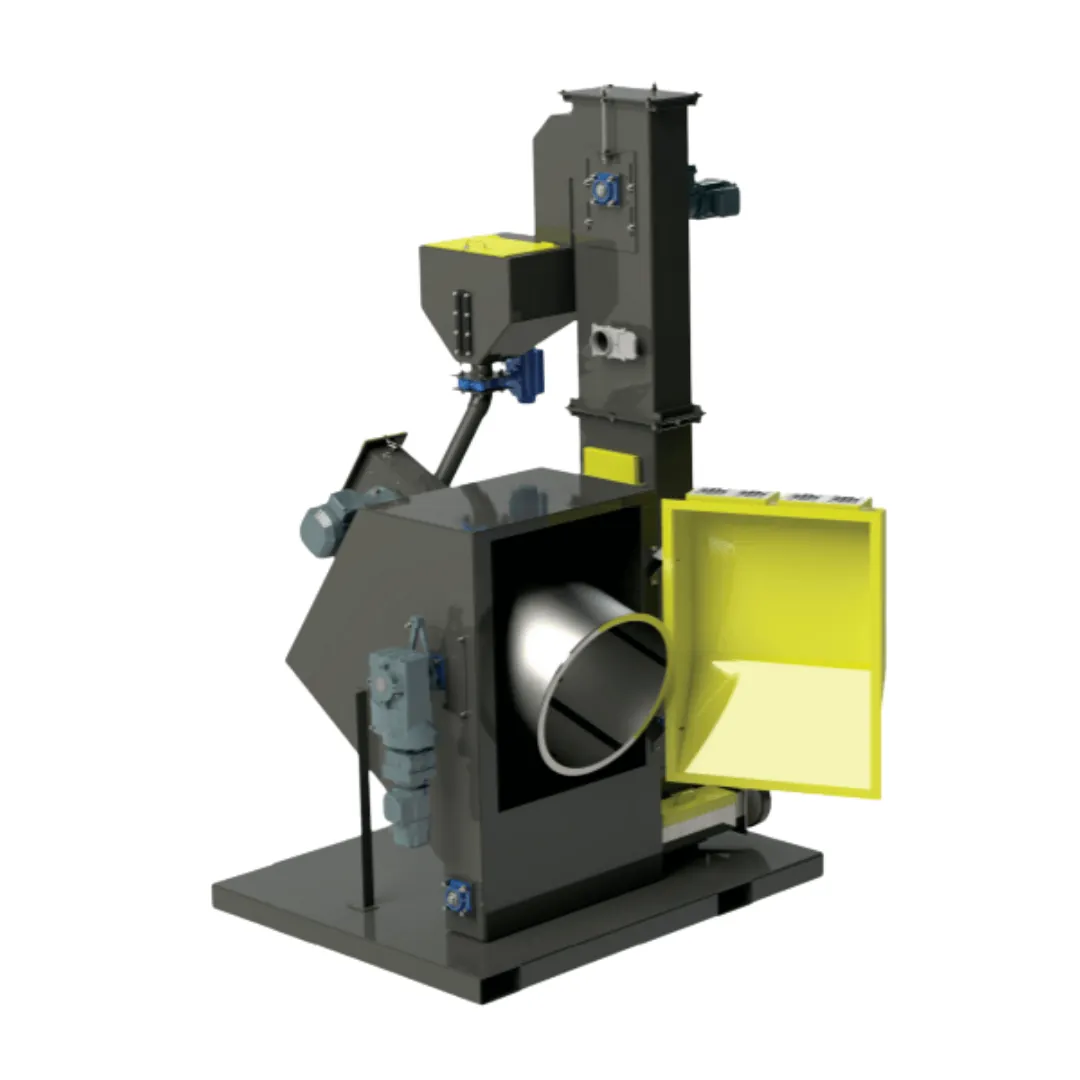
Tumble Drum Deflashing Machine
A seamless drum with no pinch points. Small thermoset parts tumble gently under a single wheel with variable drum speed, wheel…
See the machine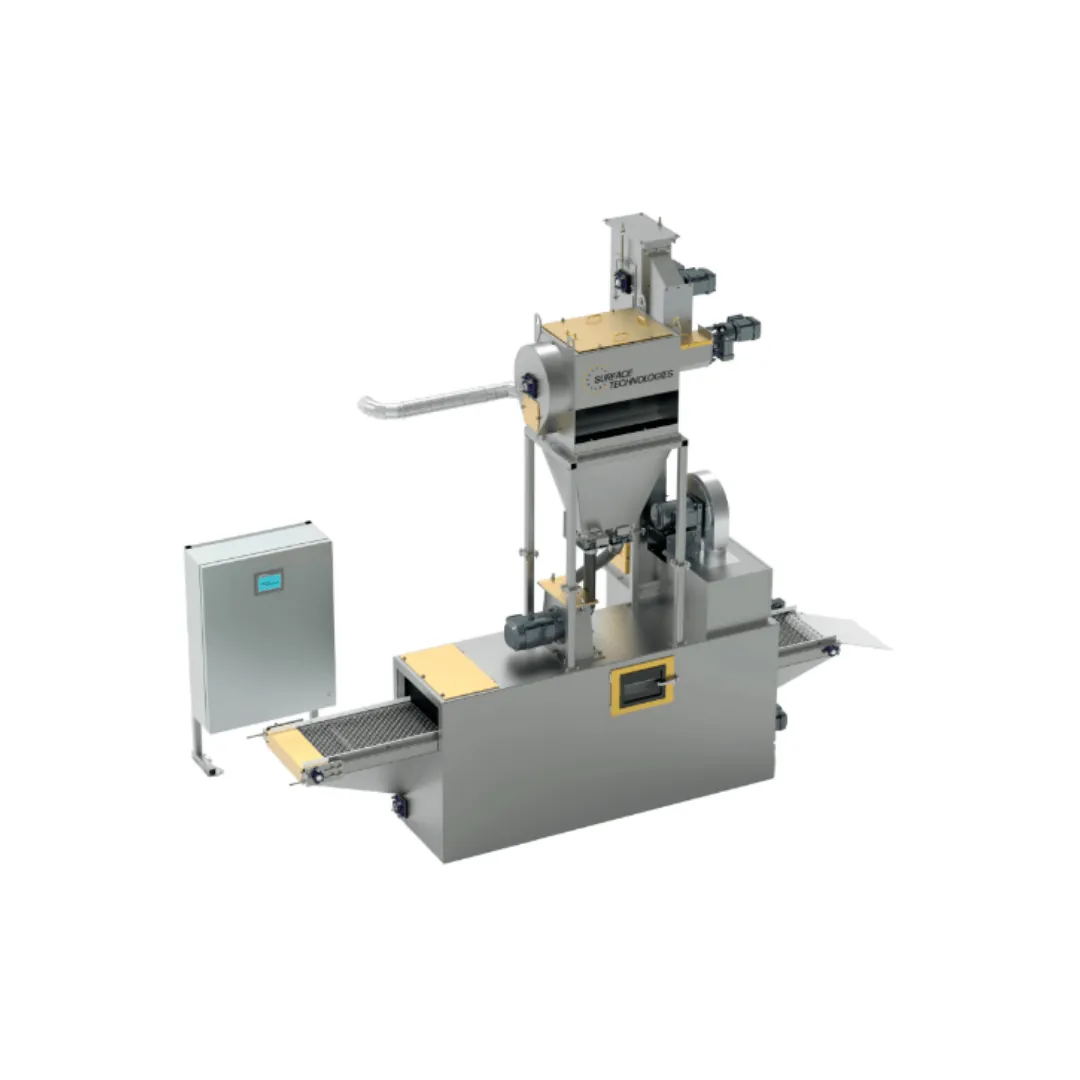
Wire Mesh Belt Deflashing Machine
Multi-wheel deflashing on a continuous mesh belt.
See the machine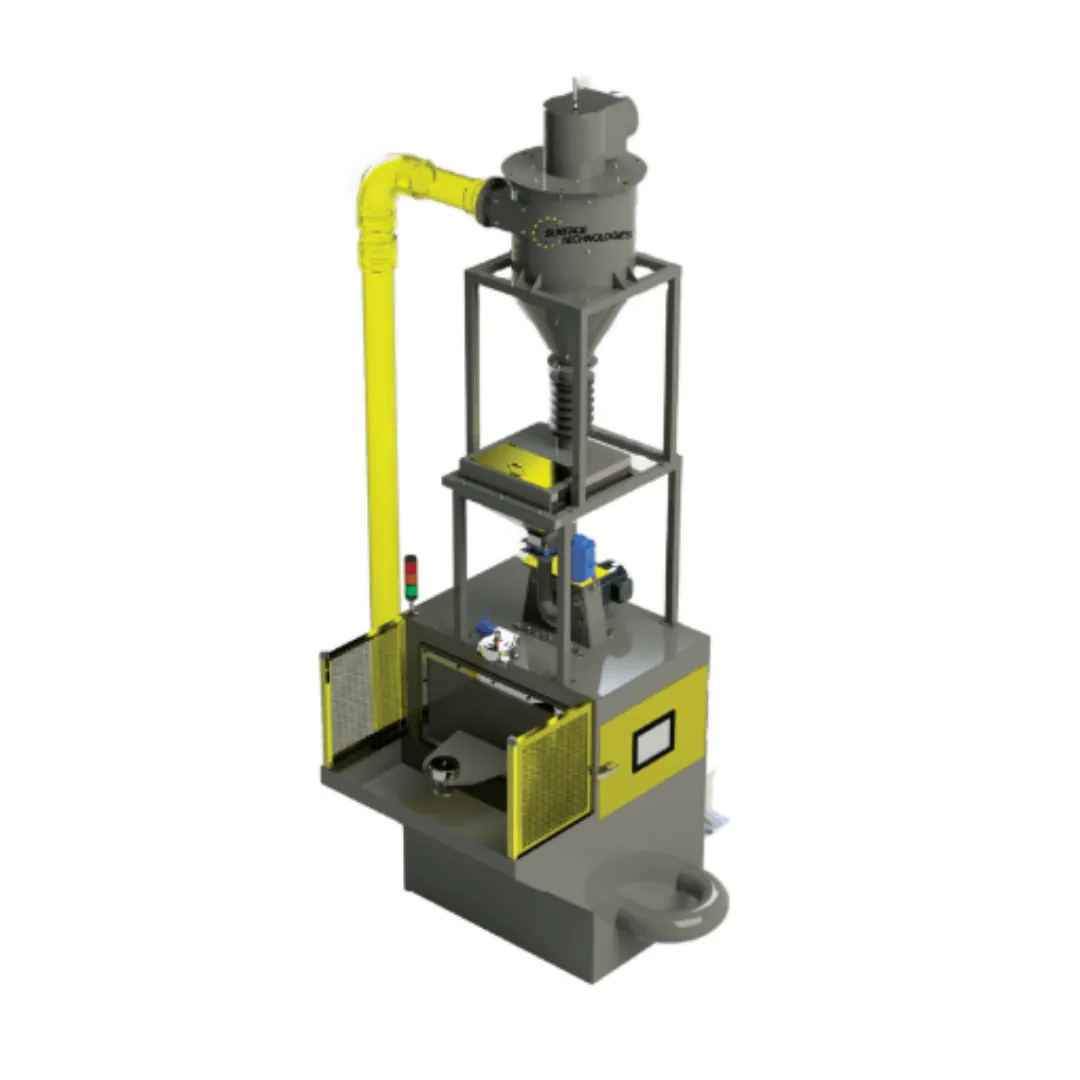
Dual-Station Index Deflashing Machine
A precision index unit moves parts between stations with minimal dead cycle time.
See the machineCommon questions
How is this different from cryogenic deflashing?
Cryogenic deflashing freezes the part with liquid nitrogen to make the flash brittle, which is needed for rubber and some thermoplastics. Thermoset flash is already brittle at room temperature, so it can be removed without nitrogen.
Will the media damage inserts or threads?
Plastic media is softer than brass and steel inserts and is chosen to be gentle on moulded threads. A trial on your part confirms the media and cycle.
Which deflash machine do I need?
Start with whether the part can tumble. If it can, a drum or belt machine; if it cannot, a wire mesh belt or the indexer. The machine finder on this site narrows it further.
Related
Automotive Production
Centrifugal shot blast systems that keep a production line moving: coating prep, peening, deburring and scale…
IndustryThermoset Casting
Soft, non-abrasive plastic media removes hard, brittle flash from moulded thermoset parts without heat…
ApplicationDescaling plate and structural steel
Hot-rolled steel arrives with a layer of mill scale that paint will not hold to and welds do not like.
ApplicationRust and paint removal
Refurbished equipment, returned racks and corroded stock all need to come back to bare, profiled metal before they can…